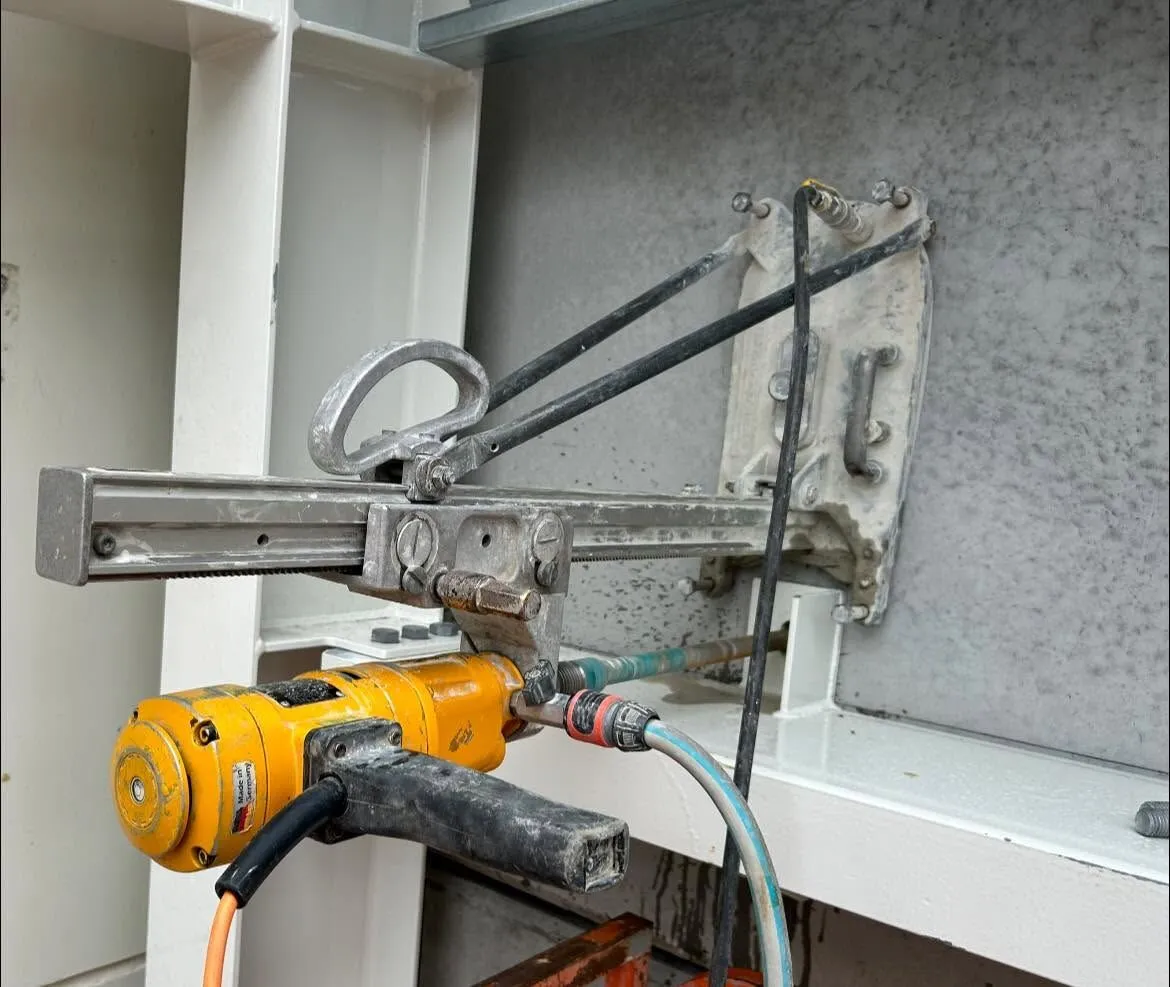
Concrete scanning
Find the steel, the conduit and the heating before the blade does. Scanned, marked, then cut.
Scanning is the cheapest part of any cut. We put the scanner over the slab or the wall before a blade or a bit goes near it, and mark what is in there: reinforcing, mesh, conduit, post tension, heating pipe.
The reason is simple. Cutting through a live service is expensive, and cutting through underfloor heating in somebody's house is worse. If nobody on site can tell us what is in the concrete, we would rather scan it than guess.
When you need it
These are the situations that put our number into somebody's hand. If yours is not on the list, ring anyway and we will tell you straight whether it is us you want.
- Nobody on site can say for certain what is in the slab or the wall.
- The building is old, has been altered, or the as builts do not match what is actually there.
- The slab may be post tensioned, where a cut in the wrong place is a structural problem rather than a repair.
- There is underfloor heating, or there might be, and nobody wants to find out with a saw.
- Core holes or a wall opening have to miss the reinforcing to keep an engineer happy.
- The floor is live, trading or in production and a strike would stop everything.
What we look for
- Reinforcing and mesh
- Located and marked
- Conduit and cabling
- Located and marked
- Post tension
- Found before we cut
- Underfloor heating
- Found before we cut
- Marked out
- On the slab, before cutting starts
- When
- Ahead of the job or on the same visit
Scanning greatly reduces the risk. It is not a guarantee, and if a result is not clear we will say so rather than cut on a maybe.
Have this ready
None of it is compulsory. It is just the difference between one visit and two.
- Any as builts, plans or old drawings, even the ones you suspect are wrong. They tell us what to look for.
- Anyone on site who remembers the building being altered.
- Clear access to the area, swept, with anything sitting on it moved.
- Whether the slab is ground bearing, suspended or post tensioned, if that is known.
- What the cut or the hole is actually for, so we know how much room there is to move it.
How we do it
The kit is named after what it does. The order matters more than the brand on the side of it.
- Scan the area, not just the line, so we know what runs into the cut from either side of it.
- Mark the finds on the slab or the wall in front of you, so the decision about where the cut goes is made with the evidence on the ground.
- Move the cut, or tell you it cannot move and what that means. We would rather have that conversation before the saw starts than after.
- Scan first and cut second, usually on the same visit, so it is one trip and one set of site paperwork.
- Say so plainly when a result is not clear. A scan that cannot see the bottom of a thick slab is not a green light.
Jobs like this one
Photographed on site, posted at the time, and shown here because the work speaks plainer than we do.
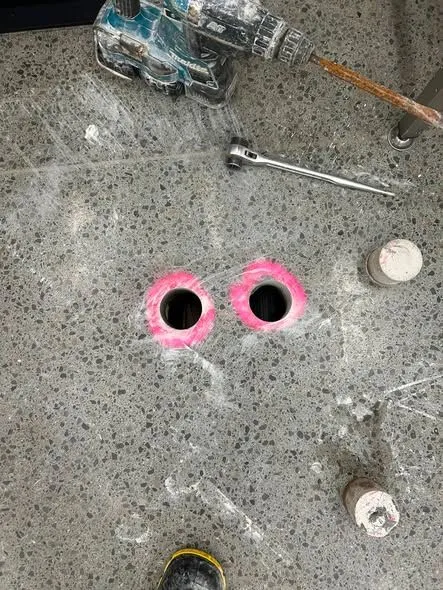
Data duct cores through a supermarket floor
A run of core holes through a supermarket floor to reach the data cable ducts underneath, marked out and drilled one pair at a time.
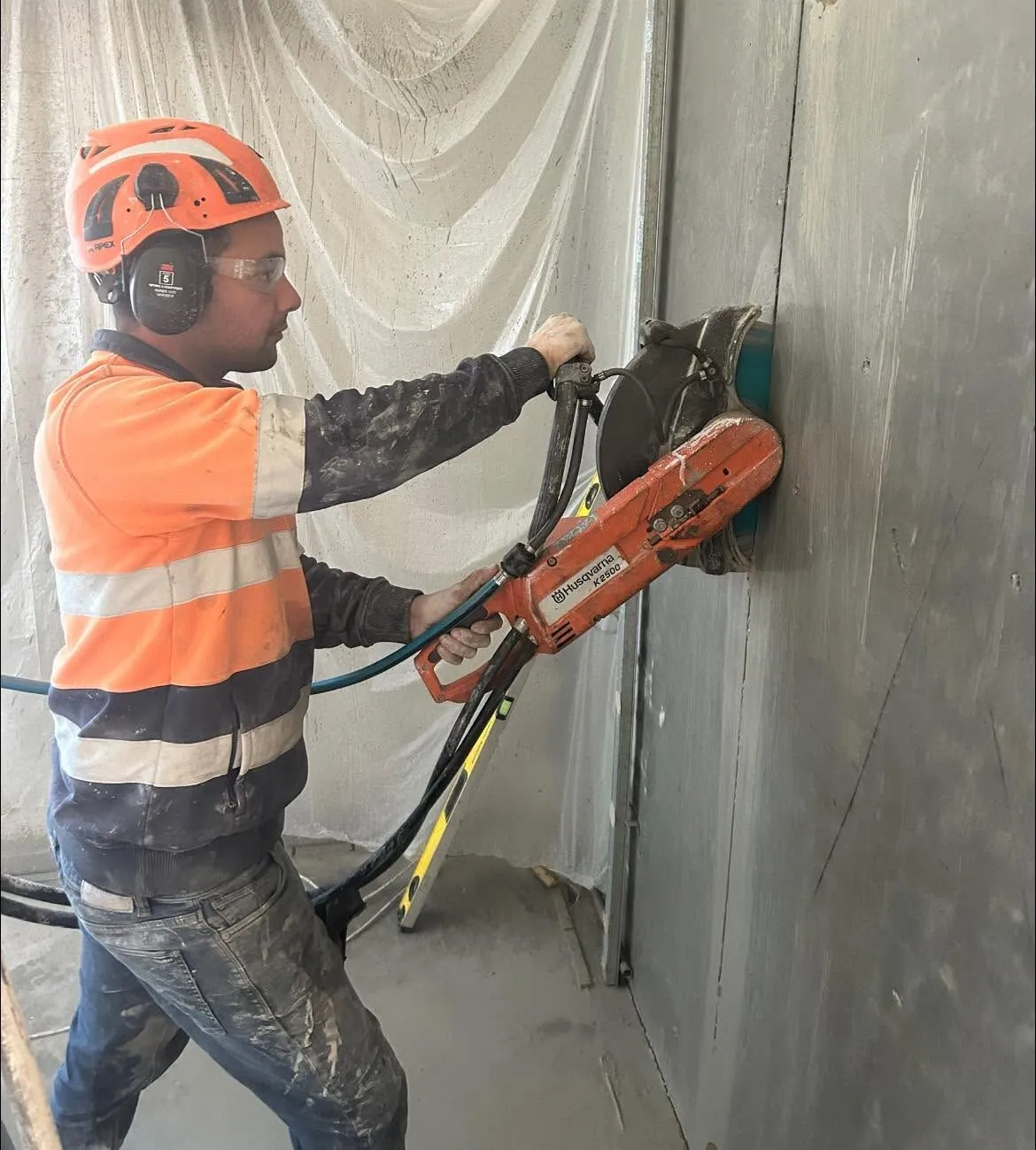
Doorway cut out of an interior concrete wall
Vertical and horizontal pre cuts with the hand saw, then the hydraulic saw to finish, inside an occupied building with the area sheeted and cleaned.
What we get asked
What can you find in a slab?
Reinforcing and mesh, conduit and cabling, post tension, and underfloor heating pipe. We mark what we find on the slab itself before anything is cut.
Why scan if the drawings exist?
Because drawings and buildings disagree more often than anyone would like, particularly on older or altered buildings. A scan takes a fraction of the time of repairing a service you have already cut through.
Do I need scanning for one small core hole?
If nobody can tell us what is behind or under it, yes. A single hole through a heating pipe or a live cable costs more than the scan and more than the drilling put together.
Can you scan and cut on the same visit?
Usually yes. We scan, mark, agree where the cut goes and then cut, which keeps it to one trip and one induction.
Is a scan a guarantee that nothing is in there?
No, and we will not tell you it is. It greatly reduces the risk, and where a result is unclear we say so and we work out the next step with you rather than cutting on a maybe.
Timaru out to the Mackenzie
Timaru and Ashburton are the two we get asked for most on this one, but the whole list below is a normal week.
- Timaru Our base
- Temuka 15 min from Timaru
- Geraldine 35 min from Timaru
- Ashburton 75 min from Timaru
- Twizel 150 min from Timaru
We also work across Canterbury, North Otago and the Mackenzie. If the job is worth the drive, we will drive it.
Need concrete scanning sorted?
Ring the number. Matt answers it, and if he is under a saw he will text you back. Tell us where you are, what you are cutting and how deep, and we will tell you when we can be there.