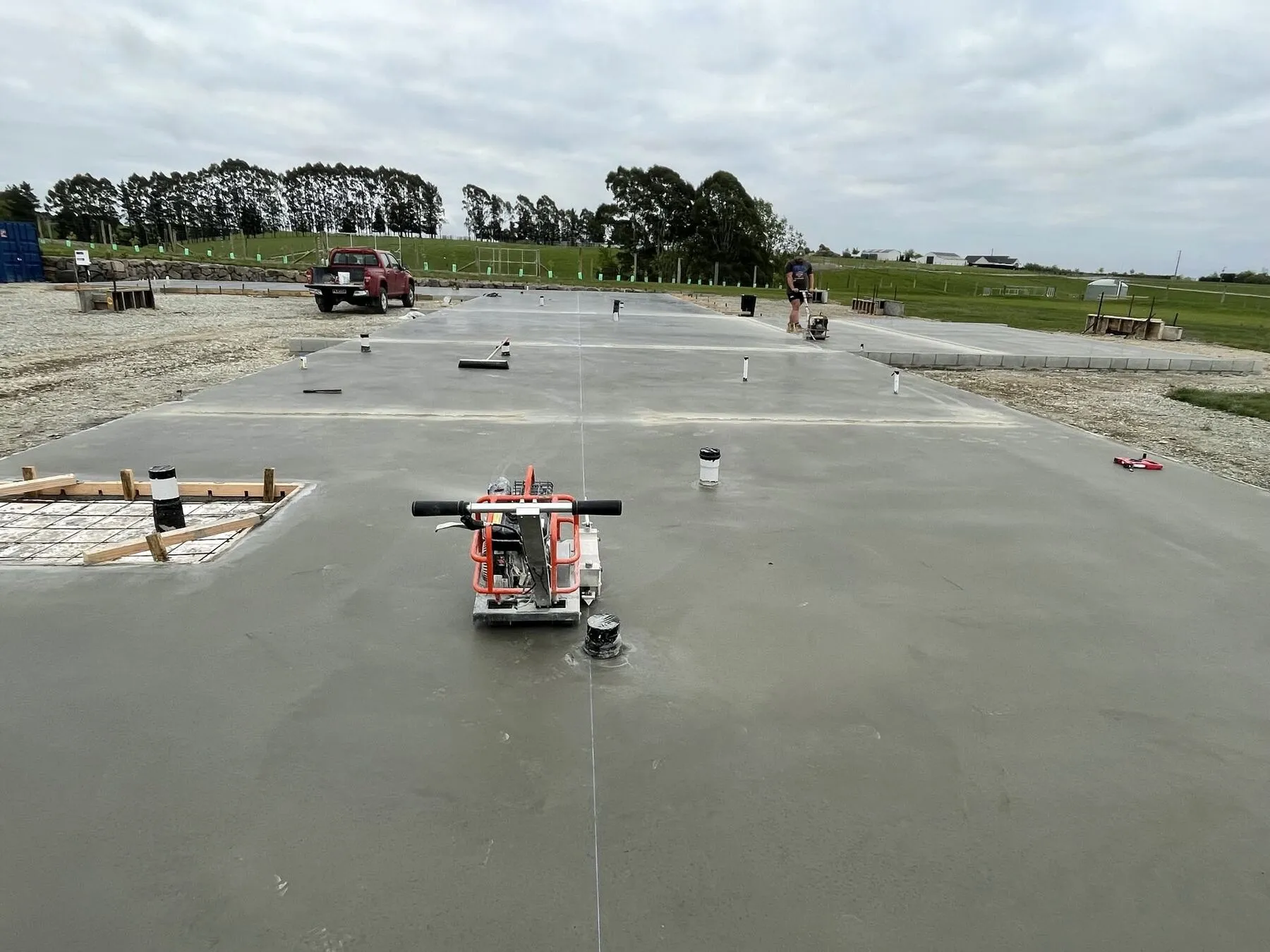
Floor and slab sawing
Expansion cuts, early entry soft cutting and full depth slab cuts. Indoors with extraction, outdoors in one visit.
Floor sawing is most of our week. Expansion cuts in a fresh house pad, control joints across a shed floor, a slot cut out of a live factory floor so a drain can go in. It is usually the job the rest of the site is waiting on, so we set out, cut, clean up and get out of the way.
We soft cut fresh slabs the same day they go down, and we cut hardened slabs to 300 mm and past it. Our saws are variable depth rather than fixed depth, which gives us far better control of where the cut finishes. Indoors, the dust goes through an extraction unit at the blade instead of through the building.
When you need it
These are the situations that put our number into somebody's hand. If yours is not on the list, ring anyway and we will tell you straight whether it is us you want.
- A slab has just gone down and the control joints have to be in before it starts shrinking.
- An expansion cut, a rebate or a straight edge is needed in a pad that is already hard.
- A trench, a drain or a duct has to come up through an existing floor.
- The cutting is indoors, in a building somebody is still working in, and dust is not an option.
- A boxing blow out has left a rough edge that needs straightening.
- A slab is coming out and it has to be cut into pieces small enough to lift.
The numbers
- Early entry soft cutter
- 50 mm
- Depth control
- Variable depth, not fixed
- Hardened slab depth
- To 300 mm and past it
- Narrowest decorative cut
- 20 mm wide
- Indoor dust
- Extracted at the blade
- Power we run on
- Three phase 400 V
Every figure here is a saw in the truck or a job we have posted. If your slab is deeper than the list, ring and ask rather than guessing.
Have this ready
None of it is compulsory. It is just the difference between one visit and two.
- Where the cuts go. Plans, a chalk line, or five minutes on site with us and we will set it out.
- Power. Three phase is ideal, and telling us what is available before the day means the right lead comes on the truck.
- Clear access to the slab. Anything sitting on a cut line has to move before we can start.
- Whether we are cutting indoors, so the extraction and the sheeting come with us.
- Any underfloor heating, conduit or post tension in that slab. If nobody knows, we scan it first.
How we do it
The kit is named after what it does. The order matters more than the brand on the side of it.
- Set out first, from your plans or marked on the ground with you, so nobody is arguing about a line after it has been cut.
- Early entry soft cutting on fresh concrete with a variable depth saw, which gives us control that a fixed depth saw does not.
- High frequency electric hand saws, about 13 kg and roughly half the weight of a petrol saw, running off three phase 400 V through an inverter. No petrol fumes indoors and less noise for everyone around the cut.
- Dust pulled off the blade into a vac, so silica does not end up through the building or in anyone's lungs.
- Slurry caught and carted away when we are cutting wet, rather than hosed into your yard or the nearest drain.
- The area swept and left the way we found it.
Jobs like this one
Photographed on site, posted at the time, and shown here because the work speaks plainer than we do.
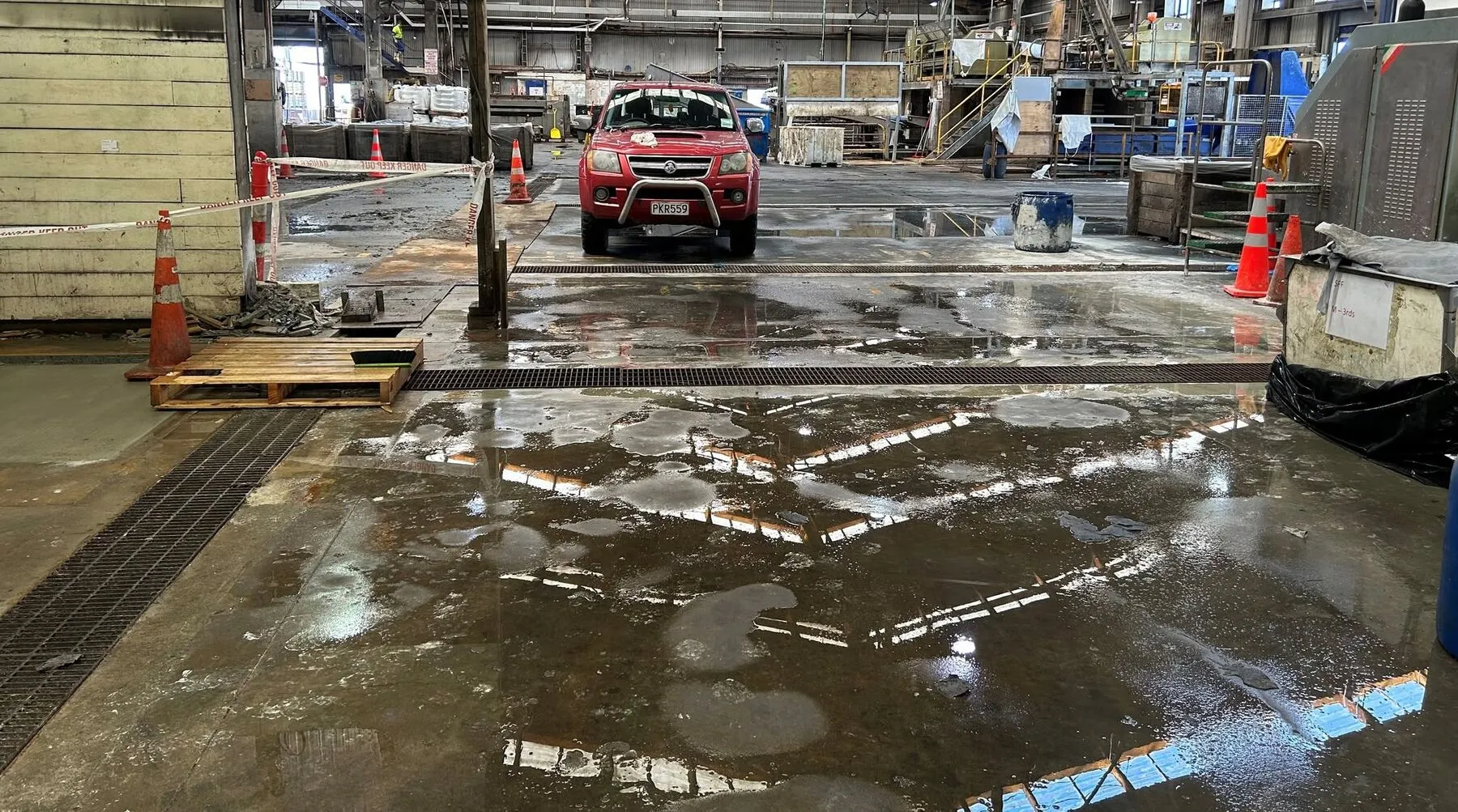
Slot drain network extension on a live factory floor
Cutting, breaking out and rebuilding a slot drain network while the factory kept running, tying into live drains under a fixed handover date.
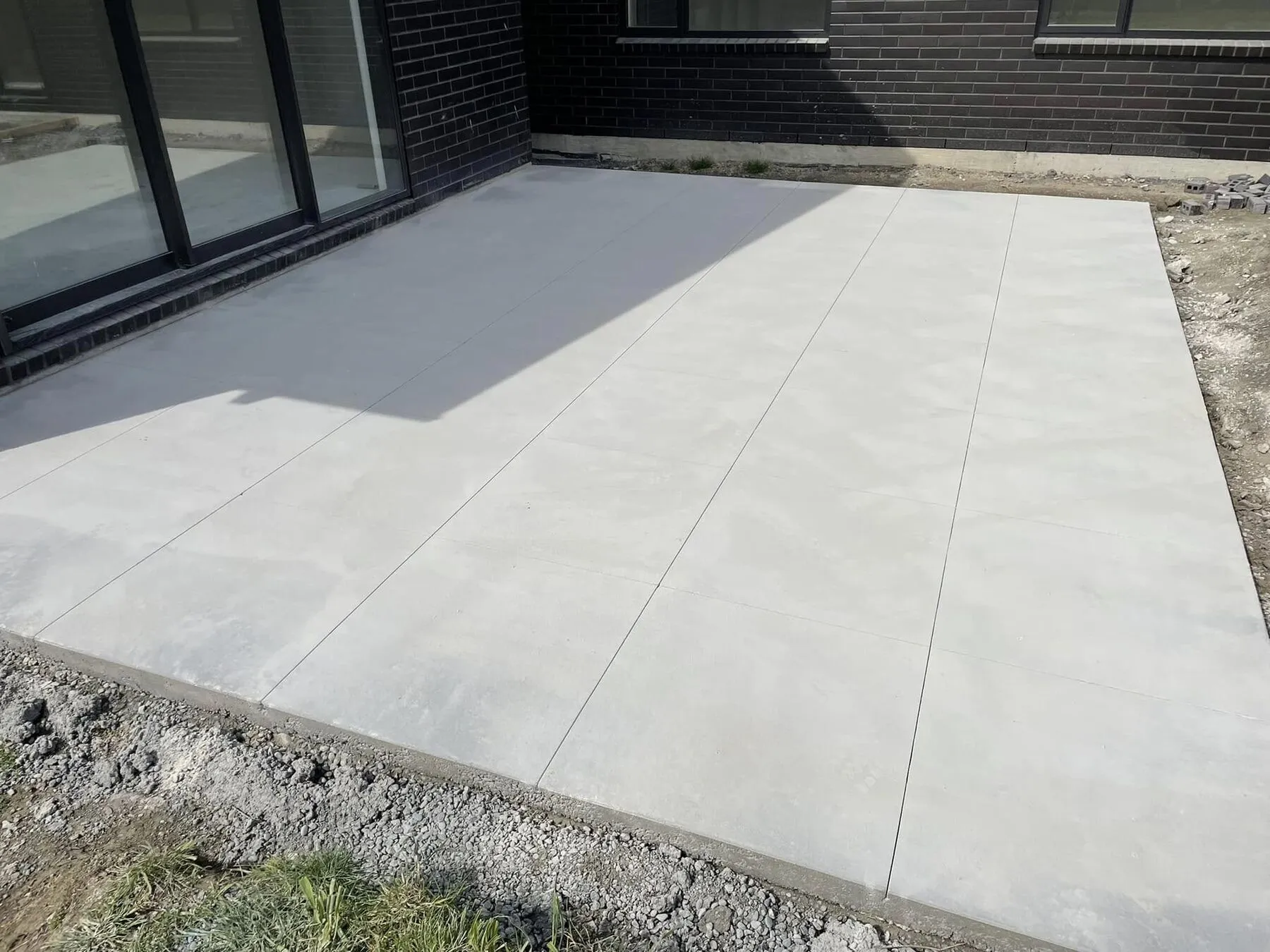
20 mm decorative cuts in a patio area
A plain outdoor pad turned into a tiled look, cut 20 mm wide to take a darker grout, set out and cut in one visit.
What we get asked
How soon after a pour can you cut?
Early entry soft cutting goes in the same day, as soon as the slab will carry the saw, before it has a chance to shrink and crack where it likes. Ring us when the pour is booked and we will work back from the finishing time.
How deep can you cut a floor?
We cut hardened slabs to 300 mm, and past that with the road saw, which takes 340 mm in a single pass. If your slab is thicker than that, tell us the number when you ring and we will say straight away whether we can do it.
Can you cut inside an occupied building?
Yes. We run high frequency electric saws with dust extraction at the blade, so there are no petrol fumes and very little airborne dust. We sheet the area, cut, vacuum the slurry and leave it clean.
Do you cut expansion joints in new driveways and house pads?
Yes, and it is a large share of what we do for local concreters. We soft cut on the day of the pour so any cracking happens under the cut line where nobody sees it.
Can you cut a decorative line rather than a control joint?
Yes. We set out decorative cuts from 20 mm wide for a tiled or patterned look, and the same wider cut is used to lay small wires and pipes or to form a shallow drain.
Do you clean up afterwards?
Yes. Slurry goes into a slurry vac and dry dust into a dry vac, and the area is swept before we leave.
Timaru out to the Mackenzie
Timaru and Geraldine are the two we get asked for most on this one, but the whole list below is a normal week.
- Timaru Our base
- Temuka 15 min from Timaru
- Geraldine 35 min from Timaru
- Ashburton 75 min from Timaru
- Twizel 150 min from Timaru
We also work across Canterbury, North Otago and the Mackenzie. If the job is worth the drive, we will drive it.
Need floor and slab sawing sorted?
Ring the number. Matt answers it, and if he is under a saw he will text you back. Tell us where you are, what you are cutting and how deep, and we will tell you when we can be there.